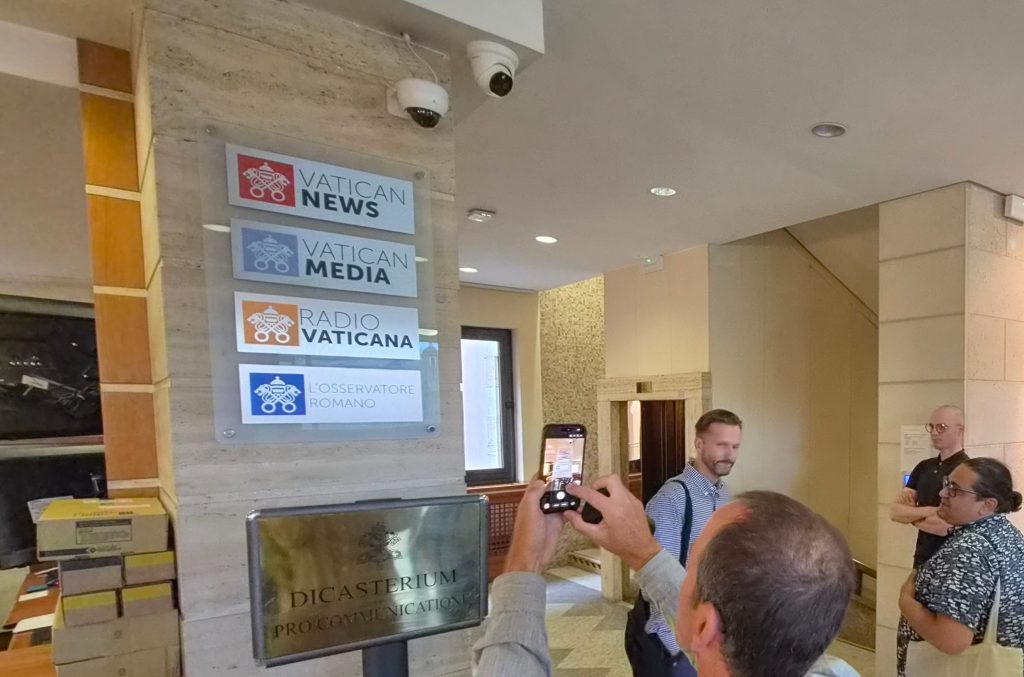
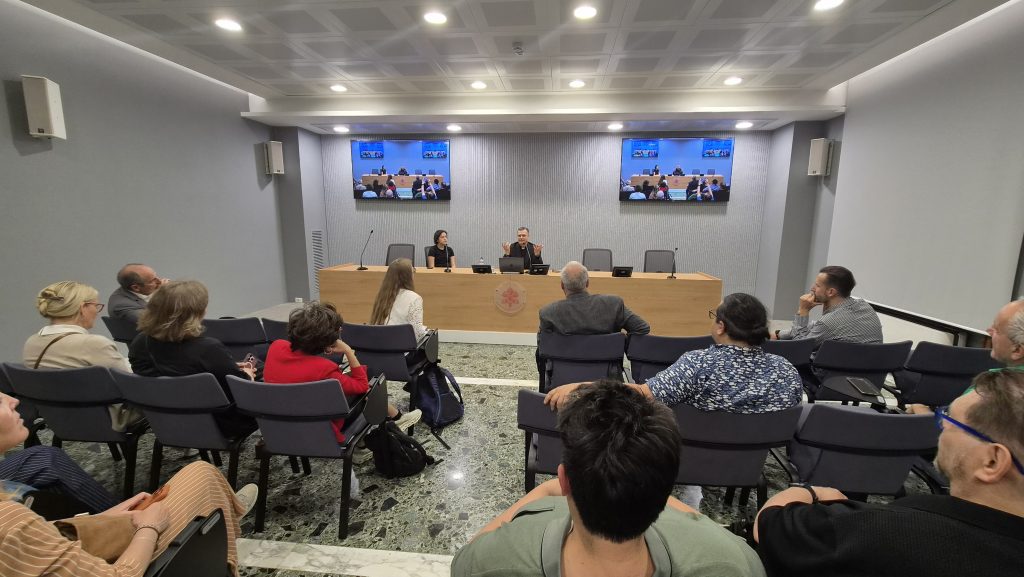
As part of the 30th European Christian Internet Conference (ECIC #30) in Rome, participants were welcomed at the Vatican by Mons. Lucio Adrián Ruiz, Secretary of the Dicastery for Communication. During the visit, he introduced Pope Leo XIV’s encyclical Magnifica Humanitas and offered a thoughtful reflection on its relevance in a time shaped by artificial intelligence. [weca.it]
Mons. Ruiz emphasized that Magnifica Humanitas is not primarily a document about artificial intelligence itself, but about the human person and the dignity of the human person in the age of AI. His presentation framed the technological revolution not simply as a technical development, but as a profound anthropological challenge that calls for discernment, responsibility, and renewed attention to what it means to be human.
A key point in his address was that technology is never neutral. Every digital system reflects the intentions, values, and assumptions of the people who design it. For that reason, AI cannot be treated as an objective force detached from human choices. Mons. Ruiz also warned that easy and immediate AI-generated answers may weaken personal judgment and creativity if people begin to hand over their own thinking and knowledge to machines.
He also raised concern about the growing concentration of power in the hands of large technology companies. In such a context, ethical reflection alone is not enough; society must also ask who defines the rules, whose values shape digital systems, and how human dignity can be protected in practice. One of the most striking themes of his presentation was the idea that AI should not be rejected, but “disarmed” — freed from the logic of domination and redirected toward genuinely human ends.
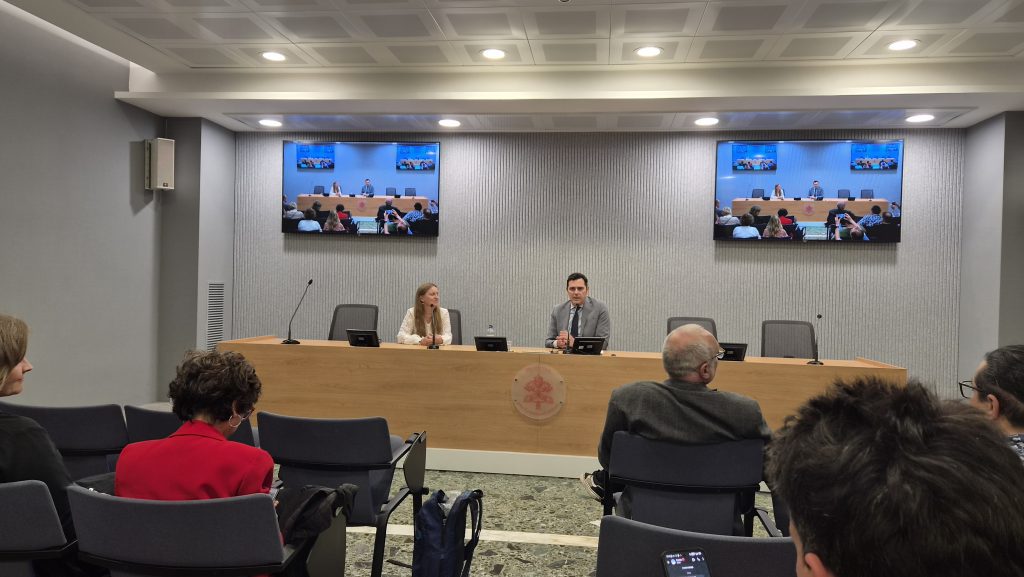
ECIC participants weres also welcomed by Alessandro Gisotti, Deputy Editorial Director of the Dicastery for Communication. In his presentation, Gisotti reflected on the mission of Christian communication in today’s media environment and highlighted one key word: together.
Gisotti described how Vatican media has undergone a long process of reform in which previously separate editorial units were brought together into a more unified structure. The aim of this development, he explained, was not primarily administrative or financial, but missionary. The central task of church communication is to serve the Gospel and make it accessible across languages, cultures and media platforms.
He also emphasized that communication within the Vatican always carries a special responsibility, since it is done in the name of the Holy See. For that reason, editorial work requires careful judgment, especially when dealing with sensitive or globally significant issues. At the same time, Gisotti underlined that responsibility should not be confused with caution for its own sake, but understood as part of a shared ecclesial mission.
Speaking about current developments in digital communication, he noted that artificial intelligence can be useful in practical work, for example in translation. However, he stressed that AI cannot replace the essential human task of understanding, interpreting and communicating meaningfully. Christian communication, he suggested, is ultimately not only about efficiency or technology, but about people working together in service of truth and hope.
For the ECIC participants, the visit offered a valuable perspective on how one of the world’s most influential church media environments is responding to digital change while seeking to remain rooted in its mission.