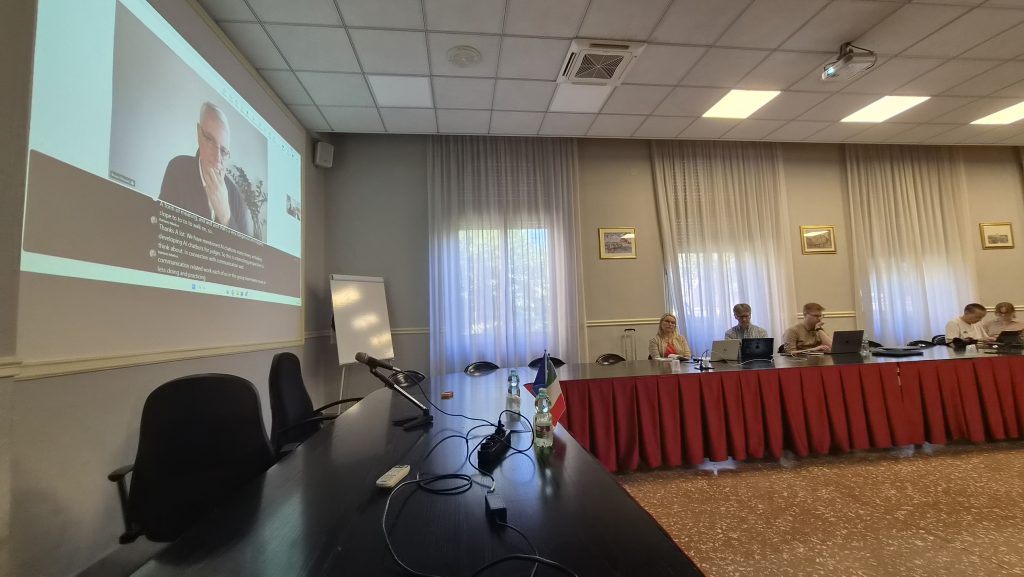
In this conversation – which will take place remotely, via video link – we will discuss the evolving nature of digital technologies, which aren’t products anymore, but architectures within which we live and work, and which transform our capacity to understand reality as well as our behaviours in it. What impacts does this have on us, on interpersonal relationships, on our understanding of who we are, on social, cultural and spiritual dynamics?
AI Summary:
- Impact of Generative AI on Communication and Knowledge: Bruno Giussani and ECIC participants discussed how generative AI has rapidly transformed communication formats, knowledge dissemination, and the authenticity of storytelling, highlighting the shift in content creation and the prevalence of AI-generated material online.
- Generative AI Definition and Scope: Bruno clarified that current discussions about artificial intelligence primarily refer to generative AI, such as ChatGPT and Claude, which can simulate text, images, video, and code, distinguishing these from less visible forms of AI used in fields like medicine and industry.
- Transformation of Content Creation: Bruno explained that over half of social media content is now generated with AI assistance, and a majority of website visits are by AI bots, indicating a fundamental change in how information is produced, circulated, and consumed.
- Acceleration of Knowledge Production: Bruno noted that AI enables the generation of text faster than it can be read, leading to an overwhelming volume of information and a significant shift in the development and dissemination of knowledge.
- Concentration of Technological Power: Bruno emphasized that, unlike previous technological revolutions, generative AI is controlled by a small number of companies and individuals, resulting in unprecedented centralization of influence over global information flows.
- Ethical and Anthropological Challenges of AI: Bruno and explored the ethical and anthropological implications of AI, referencing Pope Leo’s encyclical and discussing how AI challenges human dignity, autonomy, and the unique qualities of human beings.
- Human Dignity as a Red Line: Bruno summarized the encyclical’s core message as using human dignity as the standard for evaluating AI applications, questioning whether technology enhances or diminishes human worth.
- AI Simulation of Human Qualities: Bruno discussed the risks of AI simulating human traits such as creativity, relationality, and moral responsibility, raising concerns about people forming unhealthy attachments to AI systems that imitate but do not possess genuine human experience.
- Anthropological Focus of the Encyclical: Bruno highlighted that the encyclical frames the AI challenge as anthropological rather than purely technological, urging reflection on what humans become when interacting with AI and the potential for technology to fill existential voids.
- Role of the Church in Ethical Framing: Bruno argued that the church’s role is to ensure that moral and ethical considerations are central in AI debates, as current discussions are dominated by technological, economic, and geopolitical perspectives.
- AI’s Impact on Creativity and Cognitive Capacity: Bruno and examined how AI affects creative industries and individual creativity, discussing the risks of cognitive decline and the distinction between using AI as a tool versus as a replacement for human processes.
- Imitation Versus Genuine Creativity: Bruno explained that AI-generated content often imitates human thought without genuine creativity or understanding, referencing the concept of ‘unthought thoughts’ from the encyclical.
- AI as a Creative Tool: Bruno described the benefits of using AI to expand creative processes, such as prototyping and exploring alternatives, while cautioning against relying on AI for final outputs.
- Cognitive Debt Phenomenon: Bruno introduced the idea of ‘cognitive debt,’ where short-term gains from delegating tasks to AI may result in long-term losses of cognitive abilities, similar to the effects seen with widespread smartphone use.
- Safeguarding Human Identity in the Age of AI: Bruno and discussed the importance of protecting human voices and faces, emphasizing the church’s responsibility to maintain ethical standards and resist the commodification of identity by AI technologies.
- Human Identity and AI-Generated Media: Bruno noted that AI-generated faces and voices are not merely technical artifacts but touch on aspects of human identity considered sacred, raising the stakes for ethical stewardship.
- Algorithmic Technologies and Platform Control: Bruno described the shift from technology as a product to technology as a platform, where access is controlled by external entities, increasing vulnerability and the potential for manipulation.
- Moral Framing in AI Systems: Bruno recounted an example where the moral framework of AI systems like ChatGPT ultimately reflects the values of their creators, underscoring the need for broader ethical oversight.
- Competent and Critical Use of AI: Bruno responded to questions about using AI competently, stressing the necessity of understanding not just how to use AI but also its underlying structures, ownership, and potential for manipulation.
- Technological Resistance: Bruno advocated for ‘technological resistance,’ which involves constant vigilance and critical interrogation of AI, rather than passive acceptance or rejection.
- Understanding AI’s Influence: Bruno emphasized the importance of understanding who owns and controls AI, what worldviews are embedded in its design, and how it shapes societal relationships and individual behavior.
- Avoiding Manipulation: Bruno warned that without critical engagement, users risk being manipulated by AI systems and their owners, highlighting the need for education and awareness.
- European Digital Sovereignty and Alternatives to US Platforms: Bruno and audience discussed Europe’s dependence on American digital platforms, the challenges of achieving digital sovereignty, and practical steps for churches and organizations to adopt European or open-source alternatives.
- Extent of European Dependence: Bruno explained that approximately 80% of digital technologies used in Europe are of American origin, creating significant vulnerability due to extraterritorial US laws and platform control.
- Policy Initiatives for Sovereignty: Bruno described recent efforts by European governments and the EU to reduce technological dependence, such as the French government’s push for local solutions and the German Technology Stack policy.
- Surveillance and Data Privacy: Bruno highlighted that most major platforms function as surveillance tools, collecting vast amounts of user data, and suggested that alternative technologies could provide similar services without invasive data collection.
- Recommendations for Churches: Bruno recommended that churches and organizations prioritize non-American and open-source technologies where possible, even if less convenient, to protect member data and foster independent digital infrastructure.