Leading in the Age of Misleading:
The role of Churches in countering Disinformation
In an era shaped by misinformation and artificially generated content, the need for moral clarity and truthful leadership has never been greater. The ECIC 2025 conference will explore how churches can act as beacons of truth, compassion, and integrity in a world increasingly influenced by false narratives. The conference invites communicators, media professionals and theologians to reflect on the communication and pastoral responsibilities of churches in confronting disinformation and fostering communities rooted in truth.
More information on speakers will come further down the road.
We will have some Keynotes as well as enough time to get to know each other and learn from each others experiences.

Keynotes:
1: “Security and freedom (of religion) on the boundary between East and West: Estonia’s experience”
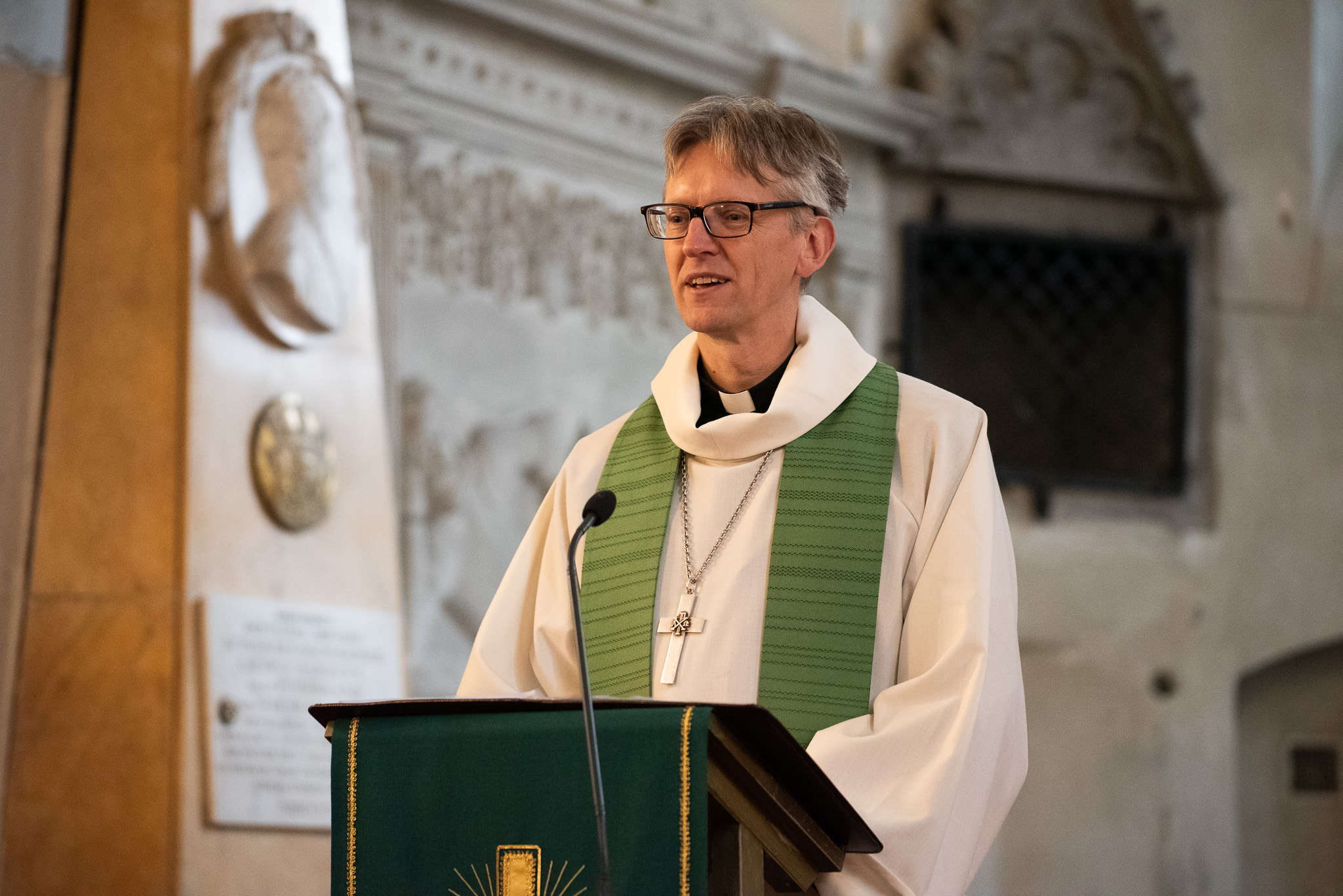
Most Rev. Urmas Viilma, Archbishop of the Estonian Evangelical Lutheran Church
Keynote:
The presentation covers issues such as the recent and ongoing controversy concerning the Moscow Patriarchate Orthodox Church in Estonia as a case study of information warfare.”
Archbishop Urmas Viilma has led the Estonian Evangelical Lutheran Church since 2015. Born in Tallinn in 1973, he studied theology at the EELK Institute of Theology (graduated 1998), was ordained deacon in 1993, priest in 1998, and consecrated bishop on 2 February 2015 after his election as Archbishop in November 2014. He previously served 11 years in the Pärnu‑Jakobi parish, was Chancellor of the EELK Consistory (2008–2015), and pastor of Tallinn Cathedral Parish (2010–2015). A lifelong religion teacher, he helped re‑establish Tallinn Toomkool in 2010 and continues to teach there. Internationally, he serves as the Lutheran World Federation Council adviser. He is married to Egle Viilma; they have one child.

2: “The media landscape of Estonia and the role of the church there”
Rev. Toomas Nigola, Assessor for Media Work of the EELC Consistory
Keynote:
Presentation introduces the Estonian media landscape across traditional and online channels and the church’s presence within it.
Toomas Nigola is a pastor of the Estonian Evangelical Lutheran Church who serves as pastor of Pärnu St Elizabeth’s Parish (since 2024) and Dean of the Pärnu Deanery (since 2025). An assessor of the EELK, he also leads public relations at the EELK Consistory. Trained in theology at the University of Tartu and the EELK Institute of Theology, and holding an MA in communication management from the University of Tartu, his ministry has included parish leadership as well as prison and police chaplaincy. He sits on the editorial board of the weekly Eesti Kirik and was named EELK Clergyman of the Year in 2024. He is responsible for the online presence of EELK and is the editor-in-chief of the Church’s news portal e-Kirik.

3: “Countering disinformation: The experience of Propastop”
NGO Propastop: propastop.org
Keynote:
Presentation introduces Propastop—its mission, operating principles, and practical day-to-day work in countering disinformation. It will briefly outline key concepts of hybrid and information warfare to establish a shared vocabulary for media professionals and to illustrate why a civil society NGO can be strategically valuable from a state perspective. The talk will also map the main hostile narratives encountered in Estonia and share effective, ethical countermeasures relevant to newsrooms and communicators. The presentation will not address purported links between the church and Russian propaganda, as this lies outside the speaker’s expertise; if participants wish, the topic can be considered during the Q&A.

4: It Doesn’t Matter If It’s Not True: The Power of Stories in an Age of Disinformation
Inga Springe
Keynote:
During a U.S. presidential primary, Republican candidates spread a story that Haitian immigrants were eating American pets. The narrative continued to gain traction even after local police declared it false, simply because it reinforced what some voters already believed about migrants.
This illustrates a modern reality: audiences are more interested in powerful stories than in facts, and every community has narratives it wants to believe. In this presentation, investigative journalist Inga Spriņģe will explore the latest disinformation trends in the Baltics. She will use specific examples—from local populists to Russian propaganda—to reveal which narratives are being pushed and, most importantly, explain the psychology behind why they are so effective.
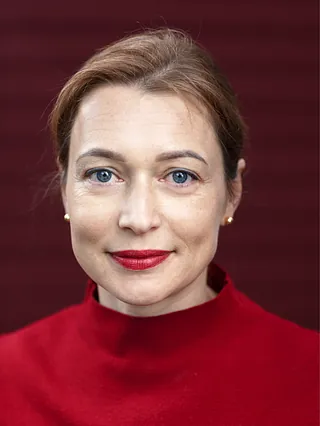
Inga Spriņģe is an award-winning investigative journalist and co-founder of The Baltic Center for Investigative Journalism Re:Baltica. She focuses on disinformation, Russia’s influence, and social inequality. Springe previously worked at Latvia’s leading newspaper, Diena, and Latvian Public broadcaster, and is a member of two global investigative journalism networks: the International Consortium of Investigative Journalists and OCCRP.
5: When official stories mislead: Digital activism and the battle for truth in the Church
Matthew Batten, Director of Communication, UK
Keynote:
Disinformation is not only the work of hostile actors Iit can emerge from within trusted institutions. The Church of England’s response to the Makin Review into abuse by John Smyth QC offers a striking example. Through selective framing, delayed disclosure, and strategic silence, official communications created a distorted picture that survivors, bloggers, and clergy challenged online. Drawing on my MA research into religious authority in digital culture, I introduce the category of “religious digital activists” – insiders and outsiders who combine theological engagement with strategic online advocacy to counter misleading institutional narratives. Using the old power vs new power framework, I analyse how closed, hierarchical communication fuels misinformation, and how digital activism reshapes authority. Attendees will gain practical strategies for dismantling misleading narratives, engaging transparently, and building trust as churches seek to be credible witnesses to truth in an age of disinformation.
Matt Batten is an experienced communications and engagement professional with a passion for helping churches thrive. He works as the Director of Communication at the Diocese of Bangor, Church in Wales. Matt has recently graduated with distinction with aMasters in Digital Theology, specialising in religious authority and digital culture.
Matt is on the editorial board of Practical Theology Hub and contribute articles about digital theology. He is a member of the Chartered Institute of Public Relations and Institute of Internal Communication, and a board member of Creative Comms Company. He lives in Cardiff, Wales and speaks Welsh.
Videos:
Links:
- ECIC 2025: Tell Your Story sessions
- CEC participates in ECIC 2025 on countering disinformation
- https://www.oikoumene.org/news/conference-in-tallinn-explores-role-of-churches-in-countering-disinformation
Image gallery